简体中文
简体中文 Russian

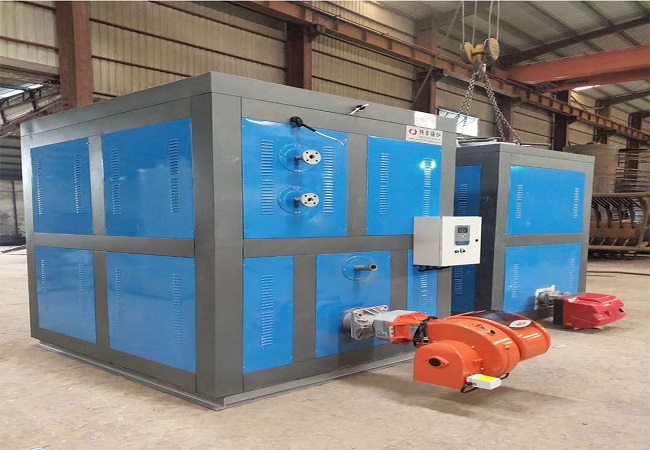
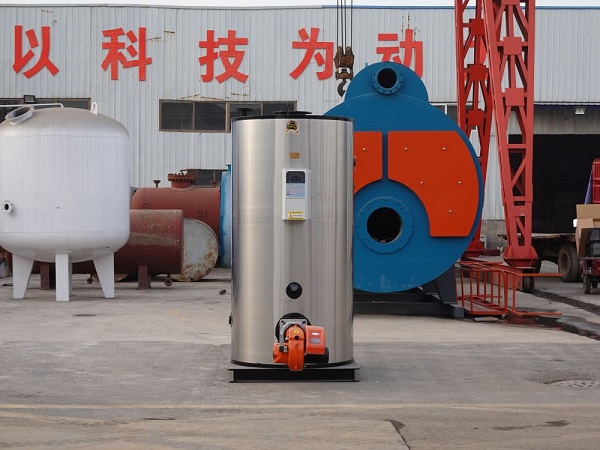

Steam boiler refers to the boiler equipment that produces steam. Steam boiler belongs to special equipment, and its design, production, delivery, and installation must be inspected by the national technical supervision department. Users need to obtain a boiler usage certificate to operate the boiler. Unlike atmospheric boilers, steam boilers must come with boiler procedures before leaving the factory. Boiler procedures include boiler body drawings, installation drawings, instrument and valve drawings, pipeline drawings, and inspection certificates.
Steam boilers are generally equipped with main steam pipes and auxiliary steam pipes. The main steam pipe is used to supply steam to users, while the auxiliary steam pipe is used for blowing ash from the boiler itself, as well as supplying steam to the steam driven feedwater pump and water injector. If equipment, valves, accessories, etc. are added, it forms a steam system.
Whether it is the main steam pipe or the auxiliary steam pipe, a single main pipe is generally used, but if it is used continuously throughout the year, a double main pipe is used for backup. If there is a branch cylinder in the boiler room, the main steam pipe can be connected to the branch cylinder.
Steam boilers are generally equipped with two valves on the main steam pipe to ensure safety. One is located close to the boiler drum or superheater outlet, and the other is located close to the steam main pipe or steam separator. The purpose of doing this is to serve as a preventive measure. When one valve fails, there is another one to take over and prevent steam backflow.
It should be noted that for steam boilers, an air release valve should generally be installed at the highest point of the steam pipeline, which can facilitate the removal of air during hydrostatic testing. In addition, steam pipelines should have a certain slope, and drain valves or vent valves should be installed at low points to facilitate the smooth discharge of condensed water.
1. Installation and debugging
(1) Installation should be strictly carried out in accordance with technical regulations and requirements, and supervision work should be done well.
(2) After the boiler is installed, it still needs to undergo acceptance and other work. Only after passing the acceptance can the following work be carried out.
(3) Before the boiler is officially put into use, it needs to undergo a test run, which is divided into two parts: no-load test and load test. During the test drive, if any problems are found, they should be dealt with in a timely manner, and it is strictly prohibited to operate with problems.
2. Update and scrap
(1) The conditions for updating the boiler include:
a. Through major repairs and renovations, the boiler still cannot restore its performance;
b. In terms of economic costs and other aspects, overall, it is not as effective as updating the economy;
c. The main components of the boiler have serious safety issues;
d. The steam supply parameters have undergone significant changes and seriously do not meet the national regulatory standards.
(2) Boiler efficiency measurements should be conducted regularly, typically every two years. If the minimum requirements set by the state cannot be met through maintenance, renovation and other means, then it should be scrapped.
(3) If the boiler deteriorates in some aspects and does not improve after treatment, and if it continues, it will seriously threaten safety production and may lead to major accidents, emergency measures should be taken in a timely manner.